

If you were injured in a crash with a semi-truck, you may assume the driver was fully qualified and legally allowed to be behind the wheel. Unfortunately, that’s not always the case..
Why Language Barriers Create Safety Risks
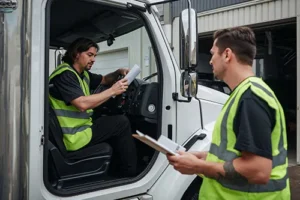 Truck drivers must make split-second decisions in high-risk environments. When a driver cannot read warning signs, understand detours, or communicate with police after a crash, dangerous situations become even worse. Language barriers can delay emergency responses, lead to improper handling of hazardous materials, and result in incomplete or inaccurate crash reports.
The Federal Motor Carrier Safety Administration (FMCSA) is the federal agency responsible for regulating trucking safety. FMCSA has long understood that language proficiency is essential for safe commercial driving. Unqualified drivers put everyone at risk. If one caused your crash, a Kansas City truck accident lawyer can help you fight for fair compensation.
The FMCSA has adopted the Federal Motor Carrier Safety Regulations (FMCSRs) to protect everyone on the road. English proficiency is just one of many federal trucking safety rules that carriers must follow to keep drivers qualified. The FMCSRs requires commercial truck drivers to speak and read English well enough to safely operate on U.S. roads. Drivers who can’t read road signs or warnings are more likely to cause head-on truck crashes by entering wrong lanes or missing detour alerts. FMCSR § 391.11(b)(2), requires commercial drivers to be able to understand road signs and signals in English, communicate with law enforcement, respond to emergencies, and complete required safety paperwork. When a truck driver can’t do these things, public safety is at risk.
Recently, enforcement of this rule has increased nationwide. According to the Commercial Vehicle Safety Alliance (CVSA), English language noncompliance is now officially considered an “out-of-service” condition. This means that the trucker is legally prohibited from driving the truck until the issue is corrected. Inspectors are now taking more drivers “out-of-service” for not meeting the English language proficiency standards.
What This Means After a Truck Accident
When a trucking company allows an unqualified driver on the road, it is likely violating the FMCSRs and state law . If that driver causes a crash, the company can be held legally responsible. At Flick Truck Accident Law, we investigate whether drivers were properly licensed, trained, and legally qualified — including whether they met English language requirements.
If you or a loved one was injured in a truck accident, this issue could be a critical part of your case. FMCSR violations often play a key role in proving negligence and holding trucking companies accountable.
If you’ve been hurt in a crash involving a semi-truck or commercial vehicle, contact Flick Truck Accident Law to learn your rights.